

























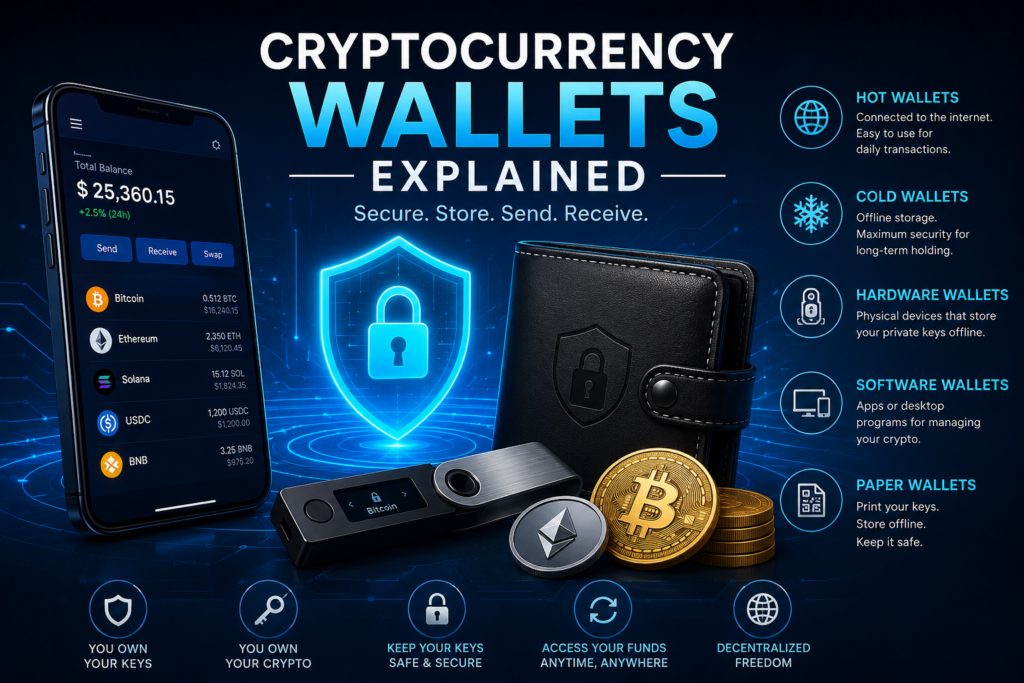
Cryptocurrency Wallets Explained
As cryptocurrencies continue to gain global adoption, understanding how to store and protect digital assets has become just as important as knowing how to buy them. Whether you are investing in Bitcoin, Ethereum, or any other cryptocurrency, a secure wallet is the foundation of your crypto journey. Unlike a traditional wallet that holds cash and cards, a cryptocurrency wallet gives you access to your assets on the blockchain by managing your cryptographic keys. Choosing the right wallet can make the difference between keeping your investments safe and exposing them to unnecessary risks. This guide explains how cryptocurrency wallets work, the different types available, and the best practices for securing your digital assets.
What Is a Cryptocurrency Wallet?
A cryptocurrency wallet is a software application or physical device that stores the private and public keys required to interact with blockchain networks. Contrary to a common misconception, wallets do not actually store cryptocurrencies. Instead, digital assets remain on the blockchain, while the wallet provides the credentials needed to access and transfer them.
Every wallet generates a unique public address that others can use to send cryptocurrency to you. At the same time, it creates a private key, which acts as your digital signature and proves ownership of your assets. Anyone who gains access to your private key can control your funds, making its protection the most important responsibility for every crypto investor.
Most modern wallets also generate a recovery phrase containing 12 or 24 random words. This phrase serves as a backup that allows you to restore your wallet if your device is lost or damaged.
How Cryptocurrency Wallets Work
Every cryptocurrency transaction relies on cryptography. When you send digital assets, your wallet uses your private key to create a secure digital signature. The blockchain network verifies this signature before recording the transaction permanently. This process allows users to transfer funds without relying on banks or payment processors.
Because blockchain transactions cannot be reversed, wallets are designed with multiple security features to reduce the risk of theft or human error. Encryption, password protection, biometric authentication, and backup recovery options have become standard features in many popular wallets. These tools make cryptocurrency management easier while maintaining a high level of security.
Hot Wallets vs. Cold Wallets
Cryptocurrency wallets are generally divided into two main categories: hot wallets and cold wallets.
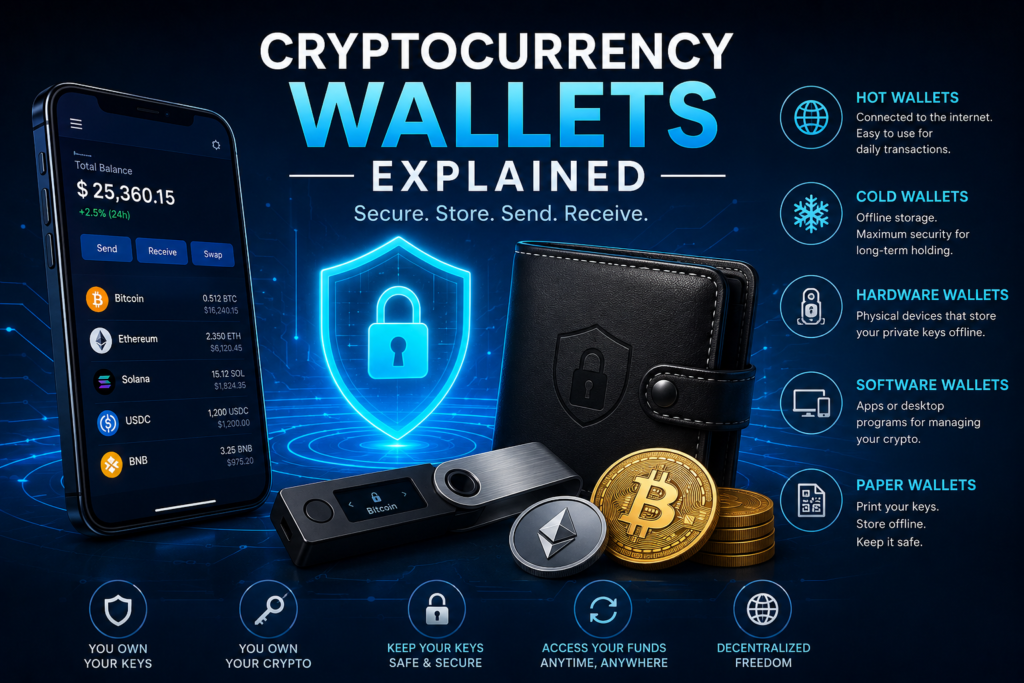
Hot wallets remain connected to the internet, making them ideal for everyday use. Mobile apps, desktop software, and browser extensions all fall into this category. Their convenience allows users to quickly send, receive, and trade cryptocurrencies or connect to decentralized finance platforms and NFT marketplaces. However, because they are online, they face greater risks from hackers, phishing attacks, and malware.
Cold wallets, on the other hand, store private keys offline. Since they are disconnected from the internet, they offer significantly stronger protection against cyberattacks. Long-term investors often choose cold storage because it minimizes the possibility of unauthorized access. While cold wallets require slightly more effort when making transactions, the additional security makes them the preferred choice for protecting valuable cryptocurrency holdings.
Hardware and Software Wallets
Hardware wallets are small physical devices specifically designed to keep private keys offline. They sign transactions internally, ensuring that sensitive information never leaves the device. Popular hardware wallets support thousands of cryptocurrencies and provide advanced security features such as PIN protection and encrypted storage. Although they require an initial purchase, they are widely regarded as the safest option for serious investors.
Software wallets are applications installed on smartphones, computers, or web browsers. They are free, easy to use, and suitable for beginners. Many modern software wallets offer features beyond simple storage, including token swaps, staking, NFT management, and integration with decentralized applications. Their flexibility has made them one of the most popular choices in the crypto industry.
Custodial and Non-Custodial Wallets
Another important distinction is whether a wallet is custodial or non-custodial.
A custodial wallet is managed by a third party, usually a cryptocurrency exchange. The provider controls the private keys and helps users recover their accounts if they lose access. This makes custodial wallets convenient for beginners, but it also means users depend on the platform’s security and policies.
A non-custodial wallet gives users complete ownership of their private keys and digital assets. No company can freeze funds or restrict access, but users are fully responsible for protecting their recovery phrase. This reflects one of cryptocurrency’s most important principles: if you control your keys, you truly control your assets.
Choosing the Right Wallet
Selecting the right wallet depends on your investment strategy. If you trade frequently or interact with decentralized applications, a software wallet provides speed and convenience. If your goal is long-term investing, a hardware wallet offers greater peace of mind by keeping your assets offline.
Before choosing a wallet, consider factors such as supported cryptocurrencies, security features, ease of use, backup options, compatibility with different blockchain networks, and the reputation of the development team. Reading reviews and using well-established wallets can help reduce unnecessary risks.
Many experienced investors use more than one wallet. They keep most of their holdings in secure cold storage while maintaining a smaller balance in a hot wallet for daily transactions.
Security Tips for Every Crypto User
Protecting a cryptocurrency wallet requires more than choosing the right software or device. Users should never share their private keys or recovery phrases with anyone. These details should be stored offline in a secure location and never uploaded to cloud storage or shared through email or messaging apps.
It is equally important to verify wallet addresses before sending funds, download wallet applications only from official sources, enable all available security features, and keep software updated. Investors should also remain alert to phishing scams, fake customer support accounts, and fraudulent websites that attempt to steal sensitive information.
Developing good security habits significantly reduces the risk of losing cryptocurrency and helps investors protect their assets over the long term.
Conclusion
A cryptocurrency wallet is much more than a storage solution—it is the gateway to the blockchain ecosystem. Whether you are buying your first Bitcoin, exploring decentralized finance, or building a diversified digital portfolio, choosing the right wallet is essential for protecting your investments.
Understanding the differences between hot and cold wallets, learning how private keys work, and following proven security practices will help you manage your digital assets with confidence. As blockchain technology continues to evolve, cryptocurrency wallets will remain one of the most important tools for anyone participating in the future of digital finance.
Frequently Asked Questions
What is the safest type of cryptocurrency wallet?
Hardware wallets are generally considered the safest because they keep private keys offline.
Can I have multiple crypto wallets?
Yes. Many investors use separate wallets for long-term storage and daily transactions.
What happens if I lose my wallet?
If you have your recovery phrase, you can restore access to your assets on another compatible wallet.
Do I need a wallet to buy cryptocurrency?
Many exchanges provide custodial wallets, but using your own wallet gives you greater control and security over your digital assets.
more in: TokenTimes