

























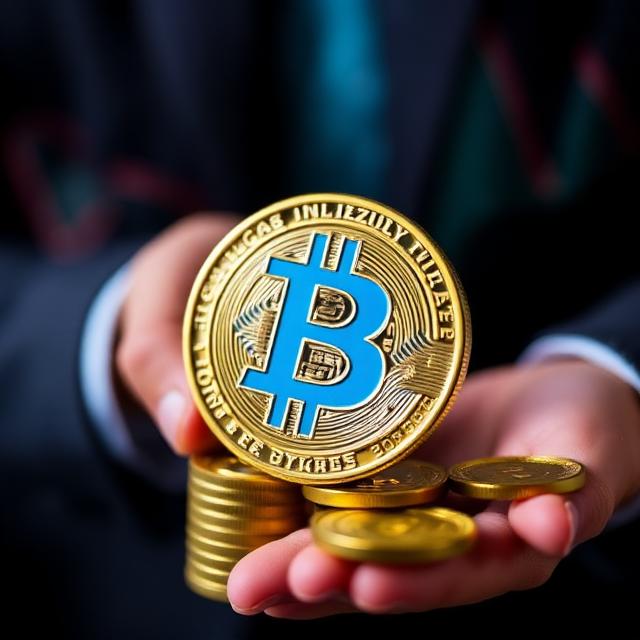
How to Invest in Cryptocurrency Safely
Cryptocurrency has become one of the most talked-about investment opportunities of the past decade. What began as a niche technology with the launch of Bitcoin has evolved into a global financial ecosystem worth trillions of dollars during its peak. Today, investors from all walks of life—including individuals, hedge funds, banks, and multinational corporations—are exploring digital assets as part of their investment strategies.
Despite its growing popularity, cryptocurrency remains a high-risk asset class. Prices can fluctuate dramatically within hours, new projects emerge every day, and cybercriminals constantly look for opportunities to exploit inexperienced investors. While stories of life-changing profits often dominate headlines, far less attention is given to the importance of investing safely.
The truth is that successful crypto investing is not about finding the next coin that will increase by 1,000%. Instead, it is about protecting your capital, making informed decisions, managing risk, and maintaining discipline regardless of market conditions.

If you are new to cryptocurrency, learning how to invest safely should be your first priority.
The first rule of cryptocurrency investing is understanding exactly what you are buying. Many beginners purchase coins simply because they see influencers discussing them on social media or because they notice dramatic price increases. This approach usually leads to emotional decisions rather than rational investing.
Every cryptocurrency serves a different purpose. Bitcoin was created as decentralized digital money, while Ethereum introduced smart contracts that allow developers to build decentralized applications. Other projects focus on payments, artificial intelligence, gaming, decentralized finance, data storage, or enterprise blockchain solutions.
Before investing, research the project’s whitepaper, development team, community activity, roadmap, token supply, real-world use cases, and competition. Understanding these fundamentals helps investors distinguish legitimate projects from those driven purely by speculation.
Another essential principle is investing only money you can afford to lose. Unlike traditional financial markets, cryptocurrency remains extremely volatile. Even the largest digital assets have experienced price declines of more than fifty percent within relatively short periods.
Because of this volatility, your emergency savings, rent, mortgage payments, tuition fees, or other essential expenses should never be invested in cryptocurrency. Instead, crypto should represent only one part of a diversified financial portfolio.
Successful investors understand that protecting their financial stability is more important than chasing unrealistic returns.
Choosing a reliable cryptocurrency exchange is equally important. The exchange acts as the gateway between traditional finance and digital assets, making security one of the highest priorities.
When selecting an exchange, look for platforms with strong security measures, transparent fee structures, high liquidity, regulatory compliance where available, and a proven history of protecting customer funds. Features such as two-factor authentication, withdrawal protection, anti-phishing codes, and cold storage significantly improve account security.
However, even the most reputable exchanges should not be treated as long-term storage solutions.
A common saying within the cryptocurrency community is, “Not your keys, not your coins.”
This phrase emphasizes the importance of controlling your own private keys.
Cryptocurrency wallets come in two primary forms: hot wallets and cold wallets. Hot wallets remain connected to the internet, making them convenient for everyday transactions and active trading. However, because they are online, they are more vulnerable to hacking attempts and malware.
Cold wallets, also known as hardware wallets, store private keys offline. Since they remain disconnected from the internet, they provide one of the safest methods for protecting digital assets over long periods.
For investors planning to hold cryptocurrency for months or years, transferring assets from exchanges into hardware wallets is considered one of the best security practices.
Diversification is another key element of safe investing. Putting your entire investment into a single cryptocurrency dramatically increases risk. Even well-established projects can experience unexpected setbacks due to regulatory changes, technical issues, or shifts in market sentiment.
Instead of relying on one asset, many investors build diversified portfolios that include Bitcoin as a relatively stable foundation, Ethereum for smart contract exposure, and selected projects from sectors such as decentralized finance, blockchain infrastructure, artificial intelligence, and Layer-2 scaling solutions.
Diversification cannot eliminate losses entirely, but it reduces the impact of a single project’s poor performance.
Investors should also develop a long-term perspective. One of the biggest reasons beginners lose money is emotional decision-making. During bull markets, fear of missing out encourages investors to buy after prices have already risen significantly. During market corrections, panic selling often locks in unnecessary losses.
Experienced investors understand that volatility is a normal characteristic of cryptocurrency markets. Rather than reacting emotionally to daily price movements, they focus on long-term adoption, technological development, and portfolio management.
One strategy that has gained popularity among long-term investors is Dollar-Cost Averaging, commonly known as DCA. Instead of investing a large amount all at once, DCA involves purchasing cryptocurrency at regular intervals regardless of current prices.
This strategy reduces the impact of market volatility while removing emotional timing decisions from the investment process. Over time, investors acquire assets at an average purchase price instead of attempting to predict market tops and bottoms.
Security awareness extends beyond wallets and exchanges. Cryptocurrency scams continue evolving each year, targeting both beginners and experienced investors.
Fraudsters frequently create fake investment platforms, impersonate well-known companies, launch phishing websites, and promote fraudulent giveaway campaigns that promise unrealistic returns. Others organize pump-and-dump schemes designed to manipulate prices before abandoning unsuspecting investors.
The best defense against scams is skepticism. If an investment guarantees profits, promises unusually high returns with little risk, or pressures immediate action, it should be treated with extreme caution.
Investors should always verify website addresses, enable two-factor authentication, avoid sharing recovery phrases, and ignore unsolicited investment advice received through social media or messaging applications.
Risk management remains one of the most overlooked aspects of cryptocurrency investing. Even investors who identify promising projects cannot predict future market conditions with complete accuracy.
For this reason, position sizing becomes essential. Allocating too much capital to a single investment increases overall portfolio risk, while maintaining balanced exposure allows investors to withstand temporary downturns without making emotional decisions.
Patience may be the greatest advantage an investor can develop. Cryptocurrency markets reward long-term conviction more consistently than short-term speculation. Many of today’s successful investors accumulated quality assets gradually, ignored short-term noise, and focused on technological progress rather than daily price fluctuations.
Ultimately, investing safely in cryptocurrency is not about eliminating risk altogether. Every investment carries uncertainty. The objective is to manage those risks intelligently while maximizing the probability of long-term success.
By researching projects thoroughly, using secure wallets, diversifying investments, avoiding scams, maintaining realistic expectations, and adopting disciplined strategies such as Dollar-Cost Averaging, investors can participate in the growing digital asset economy with significantly greater confidence.
As the cryptocurrency industry continues to mature, those who prioritize education, security, and patience will likely be better positioned to benefit from the opportunities that blockchain technology creates in the years ahead.
more in: Tokentimes